The difference between building on the solid Millstone Grit of the Pennine foothills and the alluvial terraces along the River Darwen is night and day. In Blackburn, collapsible soils are most common in areas where old glacial deposits or made ground sit above loose sands and silts — think sections of Shadsworth or the Whitebirk industrial estate. A proper collapsible soil evaluation here is not optional; it separates a stable foundation from one that settles unexpectedly after the first heavy rain. We see it time and again: a plot that looks fine during dry weather but shows sudden volume loss once wetted. Our testing catches that metastable structure before you pour concrete.
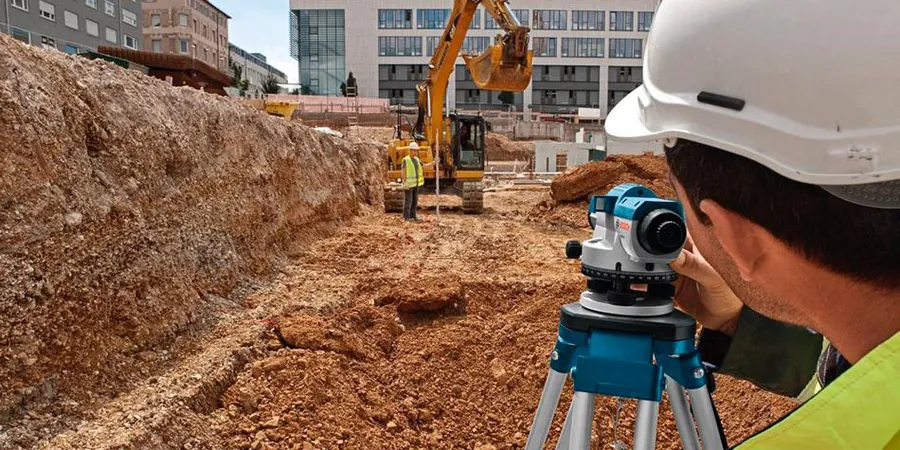
Collapse strains above 2% under 200 kPa indicate metastable ground — a clear signal to redesign the foundation approach in Blackburn.
Technical details of the service in Blackburn
The process involves:
- Undisturbed block sampling from trial pits
- Oedometer loading at natural moisture content
- Inundation under load to record collapse strain
Risks and considerations in Blackburn
The most common mistake we see from contractors in Blackburn is assuming that a soil which feels firm in summer will stay that way after winter infiltration. They skip the collapsible soil evaluation, pour a shallow strip footing, and then deal with differential settlement when the first wet season arrives. That can crack brickwork, jam doors, and cost more in remedial work than the original investigation. A dry sample tells you nothing about what happens when water reaches those loose inter-particle contacts. We have seen it more than once on residential developments near the Leeds and Liverpool Canal corridor.
Our services
Our collapsible soil evaluation is built around three complementary services that give you a complete picture of the ground behaviour in Blackburn.
Undisturbed sampling & oedometer testing
Block samples from trial pits or thin-walled tube samples are extracted with minimal disturbance. We run single-oedometer collapse tests at your design vertical stress, recording collapse strain upon inundation. Results are reported as collapse potential index per BS 1377-5.
In-situ water content & density profiling
We measure natural moisture content and dry density at 0.5 m intervals through the collapsible zone. Combined with Atterberg limits, this data identifies the layers most prone to metastable behaviour and helps you decide where to deepen foundations.
Foundation recommendation report
Based on collapse potential values and site geology, we provide written guidance on foundation type — typically recommending deep strip footings, Improvement, or pre-wetting techniques. The report references BS EN 1997-1 for limit state design.
Questions and answers
What is collapsible soil and why does it matter in Blackburn?
Collapsible soil is a loose, metastable deposit — often wind-blown silt or poorly compacted sand — that loses its internal structure when wetted. The grains are held together by capillary tension or weak cementation; when water breaks those bonds, the soil collapses under its own weight or the load of a building. In Blackburn, these soils appear in reworked glacial tills and river terrace deposits, especially near the Darwen valley. Ignoring them can lead to sudden foundation settlement after the first heavy rain.
How much does a collapsible soil evaluation cost in Blackburn?
For a standard residential plot with one trial pit and two oedometer collapse tests, you can expect a cost between £720 and £1,970 depending on site access, sample depth, and the number of laboratory tests required. The price includes undisturbed sampling, laboratory testing, and a written interpretation report. Larger commercial sites with multiple boreholes will fall at the upper end of that band.
What test method do you use to measure collapse potential?
We use the single-oedometer collapse test as described in BS 1377-5. An undisturbed sample is loaded to a target vertical stress (typically 200 kPa) at its natural moisture content, then inundated with water. The additional settlement recorded after wetting is expressed as a percentage of the original sample height — that is the collapse strain. Values above 2% indicate a need for foundation redesign.
Can I build a house on collapsible soil in Blackburn without Improvement?
It depends on the collapse potential value and the depth of the metastable layer. For collapse strains below 2%, a properly designed deep strip footing founded below the collapsible zone may be sufficient. For strains above 5%, we usually recommend pre-wetting, dynamic compaction, or replacement with engineered fill. Our report gives you clear limits so your structural engineer can design accordingly.