A common mistake contractors make on Blackburn projects is assuming any granular fill works for an MSE wall. The Pennine foothills around Blackburn contain variable glacial till and weathered mudstone. Using poorly graded material without proper geotechnical characterisation leads to differential settlement within the reinforced zone. Before designing the wall panels, a thorough classification of the backfill is essential. We combine index testing with a granulometry analysis to confirm particle size distribution meets the grading envelopes specified in BS 8006. Without this step, the internal stability calculations lose reliability and the structure may not perform as intended.
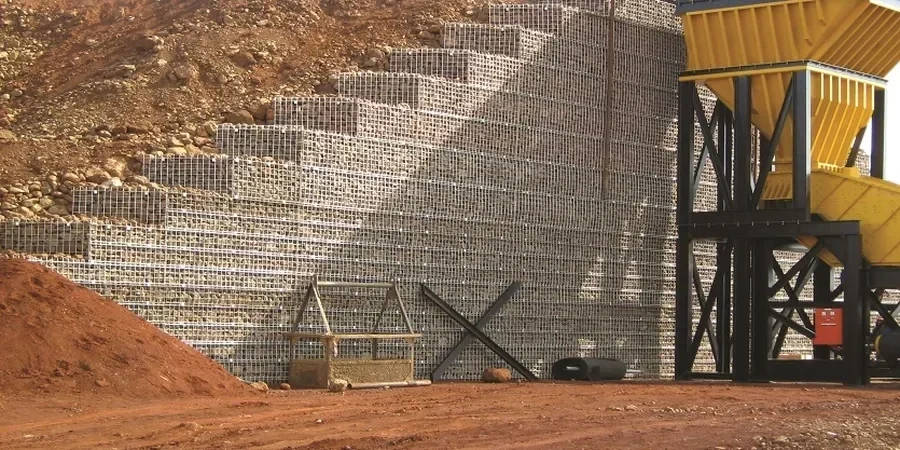
In Blackburn's glacial till, the interface friction coefficient between fill and geogrid can drop by 20% if the fines content exceeds 15%.
Technical details of the service in Blackburn
- Peak friction angle of reinforced fill (φ' ≥ 36°)
- Interface friction coefficient between soil and reinforcement
- Allowable tensile strength of geogrid or steel strips
- Global stability factor of safety ≥ 1.3 per Eurocode 7
Risks and considerations in Blackburn
In Blackburn, we often see MSE walls designed with generic reinforcement lengths that ignore the actual soil profile. The glacial till here contains cobbles and boulders that can damage geogrids during installation if the fill is not properly processed. Another risk is water build-up behind the wall face. Blackburn receives over 1,100 mm of rainfall annually, and without a drainage layer the pore pressures reduce the effective stress in the reinforced zone. This directly lowers pullout capacity. We always model the worst-case groundwater level using historical data from the Environment Agency before finalising the design.
Our services
We offer four core services for MSE wall design in Blackburn. Each is tailored to the local ground conditions and project requirements.
Reinforced Fill Characterisation
Index testing, Proctor compaction, and direct shear on candidate backfill materials. Results feed into the internal stability analysis.
Pullout Resistance Testing
Field or laboratory pullout tests on geogrid or steel strip samples. Determines the interface coefficient for design.
Global Stability Analysis
Slope stability modelling using limit equilibrium methods. Considers foundation bearing capacity and deep-seated failure surfaces.
Drainage and Filter Design
Permeability testing and filter compatibility assessment. Ensures the drainage layer behind the wall prevents pore pressure build-up.
Questions and answers
What makes Blackburn's ground conditions challenging for MSE walls?
The glacial till in Blackburn often contains cobbles, boulders, and variable fines content. This affects both the fill grading and the interface friction with the reinforcement. A detailed site investigation is essential to avoid overestimating pullout capacity.
What is the typical cost range for an MSE wall design study in Blackburn?
The cost for a full MSE wall design study including field testing, laboratory work, and stability analysis typically ranges from £1,110 to £3,510 depending on wall height, reinforcement type, and the extent of ground investigation required.
How does BS 8006 differ from Eurocode 7 for MSE wall design?
BS 8006 provides specific guidance on reinforcement spacing, connection details, and durability requirements for MSE structures. Eurocode 7 sets the overall geotechnical framework including partial factors for stability. Both standards must be applied together in Blackburn projects.
Can MSE walls be built on soft clay subgrade in Blackburn?
Yes, but the foundation must be improved or the wall founded on a granular replacement layer. The underlying clay in Blackburn has undrained shear strengths of 40–80 kPa. Bearing capacity and global stability checks are required before proceeding.