Ground improvement in Blackburn encompasses a suite of geotechnical techniques designed to enhance the engineering properties of soils, making them suitable for construction. This category is critical because much of the region is underlain by complex superficial deposits, including glacial till, alluvium, and peat, which can present significant challenges for foundations, roads, and infrastructure. Without proper treatment, these soils may suffer from excessive settlement, low bearing capacity, or instability, leading to costly delays and structural failures. By applying methods such as grouting design or lime and cement stabilization, engineers can transform marginal ground into a reliable construction platform.
The local geology of Blackburn is dominated by Carboniferous Millstone Grit and Coal Measures, overlain by variable Quaternary deposits. River valleys, such as that of the River Blakewater, often contain soft alluvial silts and clays, while higher ground may feature stiff glacial clays with cobbles. Peat lenses are a particular concern in low-lying areas, requiring specialised organic soil management to prevent long-term decomposition and settlement. These conditions demand a thorough ground investigation to select the most appropriate improvement strategy, ensuring that solutions are tailored to the specific soil profile and groundwater conditions encountered on site.
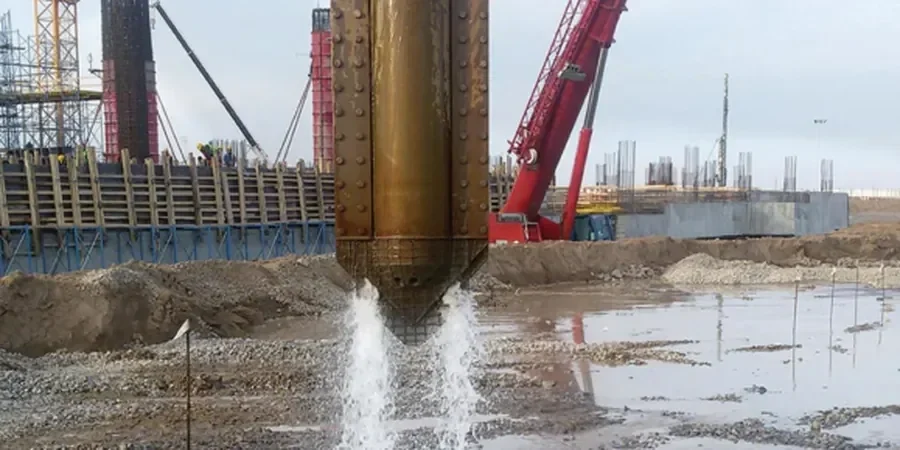
In the UK, ground improvement works must comply with British Standards and Eurocodes, notably BS EN 1997 (Eurocode 7) for geotechnical design, and the associated UK National Annexes. The execution of these techniques is governed by BS EN 12715 for grouting and BS EN 14731 for deep vibration, among others. Additionally, the NHBC Standards provide specific guidance for residential developments. Blackburn's brownfield sites, often stemming from the town's industrial textile heritage, may also require compliance with the Environment Agency's regulations on contaminated land, making techniques like jet grouting design particularly useful for creating both structural support and hydraulic cut-off barriers.
This category is essential for a wide range of projects, from residential housing estates on former mill sites to the expansion of commercial parks and transport corridors. Industrial developments with heavy floor loadings frequently require vibrocompaction design to densify loose granular soils, while embankments and storage tanks on soft clays benefit from stone column design to improve load distribution and accelerate consolidation. Infrastructure schemes, such as the Blackburn with Darwen highways network, also rely on these techniques to ensure long-term performance and minimise maintenance. Selecting the right method depends on soil type, depth of treatment, and environmental constraints, all of which are common in this post-industrial landscape.
Questions and answers
What is ground improvement and when is it necessary in Blackburn?
Ground improvement refers to engineering techniques that modify soil properties to increase strength, reduce compressibility, or control groundwater. In Blackburn, it is necessary when site investigations reveal weak deposits like alluvium, peat, or loose fill, which cannot support standard foundations without excessive settlement or instability, ensuring safe and economic construction on challenging ground.
Which UK regulations govern ground improvement design and execution?
Design is governed by BS EN 1997 (Eurocode 7) and its UK National Annex, while execution standards include BS EN 12715 for grouting and BS EN 14731 for deep vibration. The NHBC Standards apply to housing, and Environment Agency rules may be relevant for contaminated land or groundwater protection on Blackburn's brownfield sites.
How do I choose the right ground improvement method for my site?
The choice depends on soil type, depth of weak layers, groundwater conditions, and structural loads. A detailed ground investigation is essential to evaluate parameters like strength and compressibility. Techniques range from vibrocompaction for granular soils to stone columns for soft clays, with the final decision guided by a geotechnical engineer to meet performance criteria.
Can ground improvement be used on contaminated land in Blackburn?
Yes, several methods are suitable for brownfield sites. Jet grouting can create in-ground barriers to contain contaminants while improving soil, and lime-cement stabilization can immobilise certain pollutants. These techniques must be designed to comply with Environment Agency requirements, ensuring that treatment does not exacerbate contamination or harm controlled waters.