The team in Blackburn typically begins a factor of safety calculation by examining the site-specific soil profiles from boreholes and trial pits. The Pennine foothills geology means we often encounter sequences of glacial till overlying mudstone and sandstone, each with very different shear strength parameters. We run direct shear and triaxial tests on undisturbed samples, then model the failure surfaces using limit equilibrium methods. For a typical residential development near the Leeds and Liverpool Canal, we might run twenty or more iterations to find the critical slip circle before finalising the factor of safety. The process is methodical, and we always cross-check against asentamiento diferencial predictions to ensure the foundation design is solid for local ground conditions.
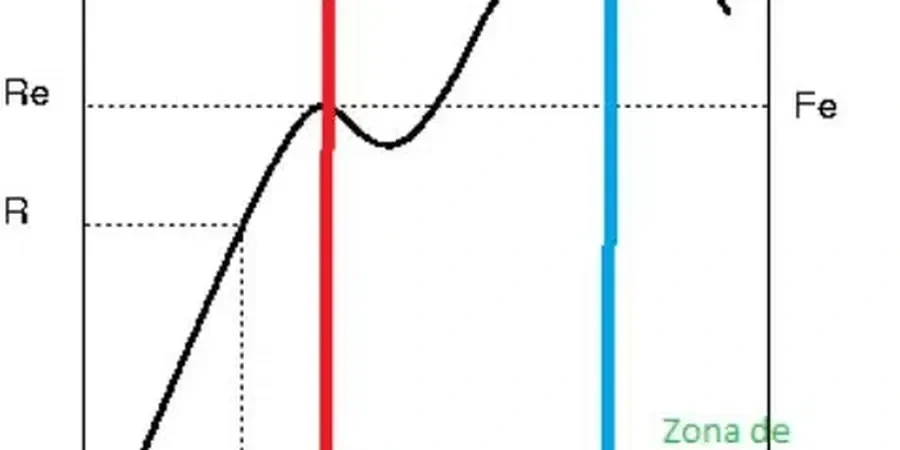
Variable glacial till across Blackburn means no two factor of safety assessments look the same; we calibrate every model to local borehole data.
Technical details of the service in Blackburn
Risks and considerations in Blackburn
The humid climate in east Lancashire means the ground rarely dries out completely, and prolonged rainfall can raise pore pressures significantly within a matter of days. If the factor of safety calculation uses a single dry-season groundwater level, the result may be dangerously optimistic. We have seen shallow rotational failures on road embankments near the M65 after only two weeks of sustained rain. The risk is highest in cut slopes through the laminated clays of the Lower Coal Measures, where the effective stress drops rapidly. Using a realistic worst-case phreatic surface is not optional in Blackburn; it is a necessity for any safe geotechnical design.
Our services
We provide two complementary services to support factor of safety studies in Blackburn, each tailored to the local geology and project stage.
Slope stability analysis
Limit equilibrium and finite element modelling for natural slopes, cuttings and embankments in Blackburn. We incorporate site-specific shear strengths, piezometric data and seismic coefficients when required, delivering clear FS outputs with sensitivity tables.
Retaining wall FS verification
Bearing capacity, sliding and overturning checks per Eurocode 7 for gravity, cantilever and anchored walls. Our reports include partial factor calculations for both drained and undrained conditions, referencing local till parameters.
Questions and answers
What factor of safety does Eurocode 7 require for retaining walls in Blackburn?
Eurocode 7 does not prescribe a single factor of safety; it uses partial factors on actions and material properties. For ULS overturning and sliding, the design effect must not exceed the design resistance. In practice, we typically achieve a global equivalent FS of 1.5 to 2.0 for gravity walls on glacial till, depending on groundwater conditions.
How does glacial till variability affect the factor of safety in Blackburn?
Glacial till in Blackburn can range from stiff clay with cu of 180 kPa to softer laminated zones with cu below 50 kPa. If the factor of safety calculation assumes uniform strength, the critical slip surface may be missed. We always run multiple profiles using the lower-bound strength parameters from the weakest soil layer encountered in the boreholes.
What is the typical cost of a factor of safety study for a residential plot in Blackburn?
A standard factor of safety assessment for a single slope or retaining wall in Blackburn ranges from £490 to £1,400, depending on the number of cross-sections, laboratory tests required and the complexity of groundwater modelling. The price includes the analytical report with sensitivity checks.
Do you include seismic loading in the factor of safety calculation for Blackburn?
Seismic loading is not mandatory for most Blackburn sites under UK National Annex to EC7, as the region is classified as low seismicity. However, for critical infrastructure or deep excavations, we can apply a pseudo-static seismic coefficient (kh = 0.05 to 0.10) to the FS calculation. The resulting reduction in factor of safety is typically less than 15%.