In Blackburn, the integrity of any structure begins below ground. The Foundations category encompasses the critical geotechnical engineering services required to design, assess, and verify the sub-structure systems that transfer building loads safely to the underlying soil and rock. From residential extensions to commercial developments and infrastructure upgrades, a properly engineered foundation mitigates the risks posed by variable ground conditions, ensuring long-term stability and compliance with UK building standards. Understanding local geology is not just best practice; it is an essential investment in the safety and durability of your project.
Blackburn's geological profile presents specific challenges that demand specialist attention. Much of the town is underlain by the Pennine Lower Coal Measures, comprising interbedded sandstones, siltstones, and mudstones, often overlain by glacial till deposits of varying thickness and consistency. These superficial deposits can include soft, compressible clays and loose, water-bearing sands. Crucially, the legacy of historical mining activity introduces the risk of shallow mine workings and made ground, making a thorough settlement analysis a non-negotiable first step. The presence of cohesive soils also raises the potential for volume change due to moisture fluctuation, which can lead to significant structural movement without appropriate design.
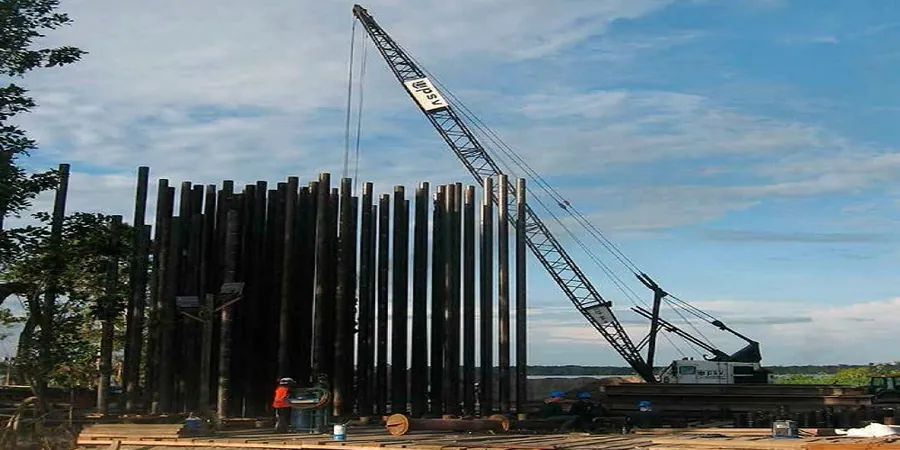
All foundation designs and investigations in Blackburn must adhere to the rigorous framework of British Standards and Eurocodes. The primary standard is Eurocode 7: Geotechnical design (BS EN 1997), supported by its UK National Annex, which dictates the principles for geotechnical investigation, design, and execution. This is complemented by BS 5930, the code of practice for ground investigations, and BS 8004, which provides specific recommendations for concrete foundations. Compliance with these standards is mandatory for securing building control approval and ensuring that designs meet the structural safety requirements of the Building Regulations 2010, particularly Approved Document A.
The types of projects requiring these specialist services are diverse. A domestic conservatory might reveal the need for an expansive soil evaluation if built on a clay-rich plot, while a new housing estate on a brownfield site will demand a comprehensive collapsible soil evaluation to identify poorly compacted fill. Multi-storey structures in the town centre, where loads are high and space is tight, often benefit from a micropile design to navigate complex urban ground conditions. For large industrial units on former marshland, a raft/mat foundation design provides a robust solution that bridges soft spots, distributing load evenly and preventing differential settlement.
Available services
Questions and answers
What are the key signs that a property in Blackburn might have a foundation problem?
Common indicators include cracks in external brickwork, particularly stepped cracking around openings, doors and windows that begin to stick, and uneven or sloping floors. These symptoms often suggest ground movement, which in Blackburn can be linked to clay shrinkage, historical mine workings, or settlement of made ground, necessitating a professional assessment.
How does the legacy of coal mining in Blackburn impact foundation design?
Historical mining has left a legacy of shallow, uncharted mine shafts and adits, alongside deeper seams that can collapse, causing surface subsidence. Foundation design must incorporate a detailed mining risk assessment and may require specialist solutions like reinforced rafts or piled foundations that bypass shallow workings and transfer loads to stable strata.
Why is a detailed ground investigation essential before designing foundations in this area?
A ground investigation, conducted to BS 5930, is the only way to reliably determine the specific soil and groundwater conditions on a site. In Blackburn, it reveals the variability of glacial till, the presence of compressible clays, or the risk of mine workings, providing the soil parameters essential for safe, compliant, and economical foundation design.
What is the difference between a raft foundation and a traditional strip foundation?
A traditional strip footing is a linear trench filled with concrete to support load-bearing walls, suitable for stable ground with good bearing capacity. A raft foundation is a single, thick reinforced concrete slab covering the entire footprint, which spreads the building load over a wider area, making it ideal for weaker soils where differential settlement is a concern.