Soils in Blackburn vary a lot. Over near Pleasington you hit sandy gravels with high permeability. Cross the Leeds and Liverpool Canal into the town centre and you find dense glacial till that drains much slower. We run infiltration tests — both Porchet and double-ring infiltrometer — across all these ground conditions. The method we choose depends on the soil type and the drainage requirements of your project. Before we start any infiltration work we often combine it with a permeability field test to cross-check results in layered ground. That way we catch perched water tables early.
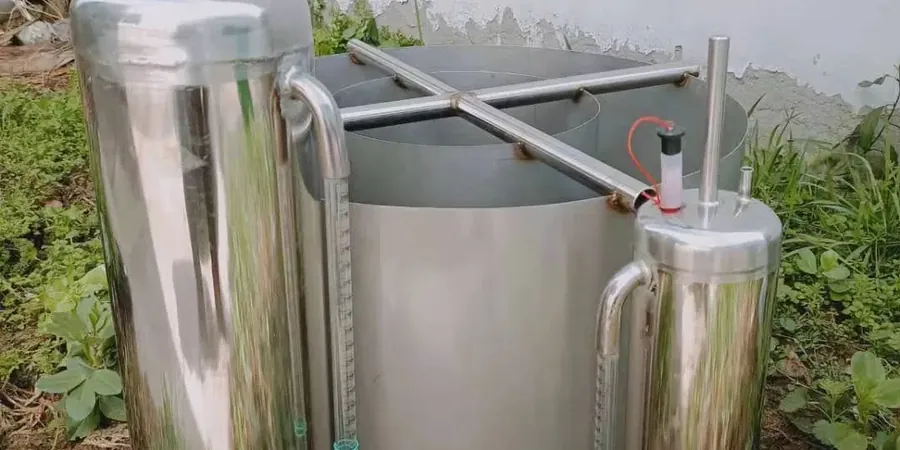
Double-ring infiltrometer for surface soakaways. Porchet method for deeper boreholes. Choice depends on soil type.
Technical details of the service in Blackburn
Procedure video
Risks and considerations in Blackburn
We saw a site near Blackburn town centre where a drainage trench was dug after heavy rain. The contractor assumed uniform soils. Instead, they hit a clay lens at 1.2 m that stopped infiltration completely. Water pooled in the excavation for three days. That failure cost a week of programme time. A proper infiltration test beforehand would have caught that clay lens. In Blackburn's glacial till, missing a low-permeability seam is a common risk. We always test at multiple depths to map the vertical permeability profile.
Our services
We offer a full suite of infiltration testing services across Blackburn. Each method is selected based on site conditions and project requirements.
Double-ring infiltrometer test
Used for surface infiltration rates in permeable soils. Two concentric rings maintain constant head. Suitable for SUDS, soakaways, and drainage fields.
Porchet borehole test
Falling-head test inside a pre-bored hole. Good for deeper permeability profiles in clay or till. We measure water level drop at set intervals.
Open-pit infiltration test
Large-scale test using an excavated pit filled with water. Used for high-flow designs like attenuation basins. Monitors infiltration over 24 hours.
Field permeability profiling
Combination of infiltration tests with soil logging. We correlate permeability with soil type, density, and moisture content for each horizon.
Questions and answers
How long does an infiltration test take on a typical Blackburn site?
A single double-ring test takes about 2 to 3 hours for steady-state readings. The Porchet method can take 4 to 6 hours if the soil is clay-rich. We usually need one full day for a standard site with three test points.
Do I need a soakaway design before the infiltration test?
No. The test provides the design infiltration rate. That data goes into the soakaway sizing calculation. We run the test first, then the engineer uses the rate to size the drainage structure.
What is the difference between Porchet and double-ring infiltrometer?
The Porchet test is a falling-head method inside a single borehole. It measures vertical infiltration at depth. The double-ring uses two concentric rings with constant head to measure surface infiltration. Porchet is better for deeper layers; double-ring is for topsoil and sub-base.
How much does an infiltration test cost in Blackburn?
Typical cost for a site with three test points is between 260 and 330 GBP. This includes mobilisation, test execution, data analysis, and a summary report. Larger sites or deeper boreholes may increase the cost.
Can you test during wet weather in Blackburn?
We can, but the results may show lower infiltration rates due to pre-wetted ground. Ideally we test when the soil moisture is representative of average conditions. If the ground is saturated from rain, we postpone or adjust the interpretation.